Dust 2 Callouts: Complete CS2 Map Communication Guide Description

Share
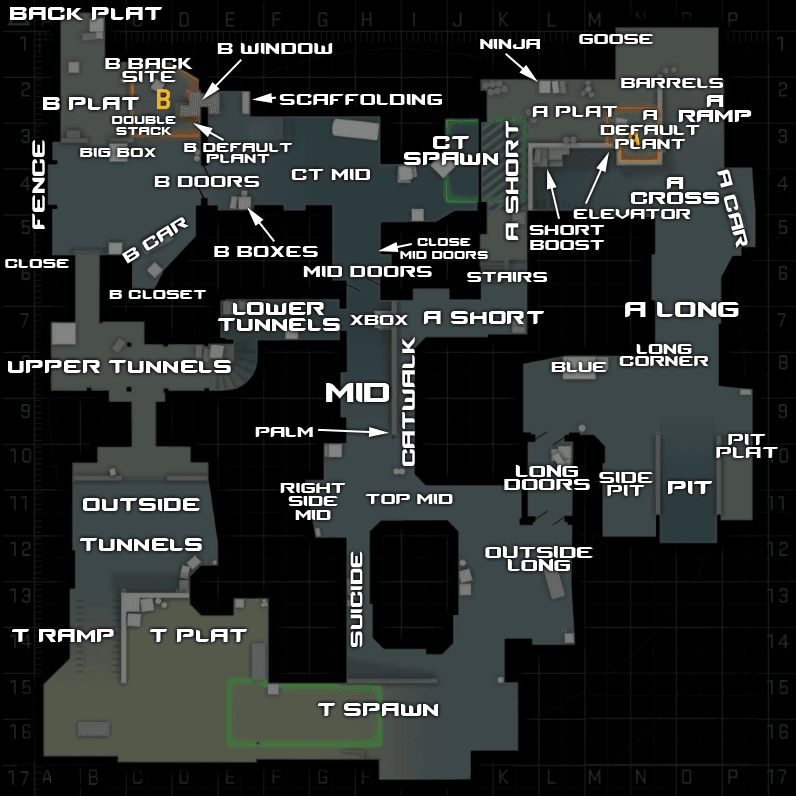
Dust 2 is the map that started it all for most people in this scene. Even players who haven't touched CS in years recognize the layout at a glance. But recognizing the map visually and actually knowing every Dust 2 Callouts name are two completely different things - and showing up to ranked without the second one is a reliable way to frustrate every teammate you get matched with.
This is the complete breakdown. Every position, every nickname, every spot your CT or T is going to call during a live round.
Why Dust 2 Callouts Still Matter So Much
People have been playing this map since the original Counter-Strike days, so the callout language is deeply standardized across every level of play. Unlike newer maps where players sometimes invent their own names for spots, Dust 2 Callouts are consistent from beginner lobbies all the way to pro tournaments. Learn them once and they never change.
Knowing the map visually isn't enough - you need to be able to call quickly and clearly in the middle of a round when your team is reacting live to information. Even in solo queue, correct callouts can completely change how your teammates respond to a push.
A Site Callouts
A site is the most contested piece of real estate on the entire map. These are the positions every player needs to know cold before they even queue:
- Long A (Long) - the extended corridor running from T-spawn to the site, one of the most iconic angles in CS history
- Pit - the sunken position on the left side of long, one of the strongest CT holds on the whole map
- Long Corner / Long Doors - the corner just before the long ramp opens up; a classic ambush spot
- Short - the upper path from catwalk that connects mid to A site
- Cat / Catwalk - the elevated walkway from mid leading to short
- CT / Back Platform - standard CT hold position at the back of A site
- Goose / Default - the standard bomb plant spot on A
- Car - the large vehicle on the right side of A site used for cover
- Ramp - the approach connecting site to the CT rotation path
A Site Quick Reference Table
|
Location |
Also Called |
Primarily Used By |
|
Long A |
Long |
Both |
|
Pit |
Long Pit |
CT |
|
Short / Cat |
Catwalk |
T |
|
Goose |
Default |
T (plant) |
|
CT / Back |
Back Site |
CT |
|
Car |
A Car |
Both |
|
Ramp |
A Ramp |
Both |
Mid Callouts
Mid is the heart of the map and controlling it opens up both sites simultaneously. Know these Dust 2 Callouts before you think about contesting it seriously:
- Top Mid / Mid Doors - the main choke from T-side into mid
- Xbox / Boost - the barrel box used for boost plays to gain window control
- Lower Mid / Suicide - the exposed lower path cutting toward B tunnels; high-risk peeking territory
- CT Mid - the CT-side entrance into mid from spawn
- Short - the upper transition from mid across to A site
The mid window is one of the most impactful angles on the entire map. Whether it's open or closed changes the whole T-side plan for the round - always call the status early.
B Site Callouts
B is generally the more chaotic site with faster executes and less time to react. Core positions:
- Upper Tunnels / T Tunnels - the main T-side approach to B site
- Lower Tunnels - the lower split-off path from upper tunnels
- B Doors - the CT-side entrance onto B site
- Close / B Close - the immediate left corner entering from tunnels; gets players every game
- Big Box / Platform - the large elevated box providing cover mid-site
- Window - the opening on B site from which CTs can spot early tunnel pushes
- Van / Back Wall - the back corner of B site
If you want a fully visual version of these Dust 2 callouts with labeled screenshots, Dust 2 callouts maps every spot interactively so you can cross-reference positions while you play.
Commonly Confused Spots
Even players who think they know the map mess these up regularly:
- Pit vs. Long Corner - pit is the sunken hole at the start of long; long corner is the door corner before the ramp opens up. Completely different positions, very commonly swapped by newer players
- Lower Tunnels vs. Upper Tunnels - always be specific here, especially when calling CT rotations
- Xbox vs. Boost - xbox is the box itself; boost is the action of getting elevated on it. "He's on xbox" means someone is standing on the box; "they're boosting xbox" means someone is getting lifted up
How to Drill These Into Your Memory
Learning Dust 2 Callouts isn't a one-session job. It's about building the habit of calling under pressure in live rounds:
- Load an offline server and walk every inch of the map saying positions out loud as you pass through them
- Watch a pro demo on Dust 2 with audio - listen for how quickly and precisely they call
- In your next ranked game, set a personal goal of making a correct callout within two seconds every time you spot an enemy
- When a teammate calls a position you don't recognize, ask after the round - not mid-gunfight
Dust 2 is the easiest map to learn callouts on because the community language is so established and universally agreed upon. Get these down first, then apply the same discipline to the rest of the active pool.